Your customers want integrations that feel like part of your product, not a side quest into a third-party tool they have to configure themselves. Zapier fills the gap in a pinch, but at some point the gap becomes the product, and that's where things get awkward. If you're comparing zapier alternatives that actually fit a SaaS product model, this breakdown covers the seven most relevant options right now.
TLDR:
- Zapier's task-based pricing and one-record-at-a-time model breaks down fast for B2B SaaS teams
- No Zapier alternative offers a white-label embeddable UI except hotglue and tray.ai (limited)
- tray.ai costs can reach ~$40K/year with pricing tied to workflow volume, not tenant count
- Most alternatives (Make, Pipedream, n8n) lack embedded product experiences for your customers
- hotglue is the only tool in this comparison with per-tenant pricing, open-source connectors, and a white-label widget
What Is Zapier and How Does It Work?
Zapier is a workflow automation tool that connects web apps through a trigger-action model. You pick a trigger event in one app, define one or more actions in another, and Zapier runs the logic automatically, no code required. These automated workflows are called Zaps, and they're designed to be built by non-technical users in minutes.
The app library is genuinely massive. Zapier connects 9,000+ apps, a breadth that made it the default choice for teams needing quick app glue. That breadth is a big reason it became the default choice for marketers, ops teams, and solopreneurs who need to glue tools together quickly.
Pricing runs on a task-based model, where each action that executes counts as a task and your plan determines your monthly allotment. The free tier covers 100 tasks, Professional starts at $19.99/month billed annually for 750 tasks, and Team starts at $69/month.
That model works fine at low volume, but costs climb fast once workflows get complex or user counts grow. Tenant-based iPaaS pricing is an alternative worth understanding. Multi-step Zaps multiply task consumption quickly, and there's no native way to embed Zapier inside your own product for your customers to use. For B2B SaaS teams trying to offer integrations as a feature, that last part tends to be the dealbreaker.
Why Consider Zapier Alternatives?
Zapier earns its reputation for simple, low-volume automation. If you need to send a Slack message when a Google Form is submitted, it genuinely works well. The problem shows up when B2B SaaS teams try to stretch it into something it wasn't designed for.
A few friction points that come up repeatedly:
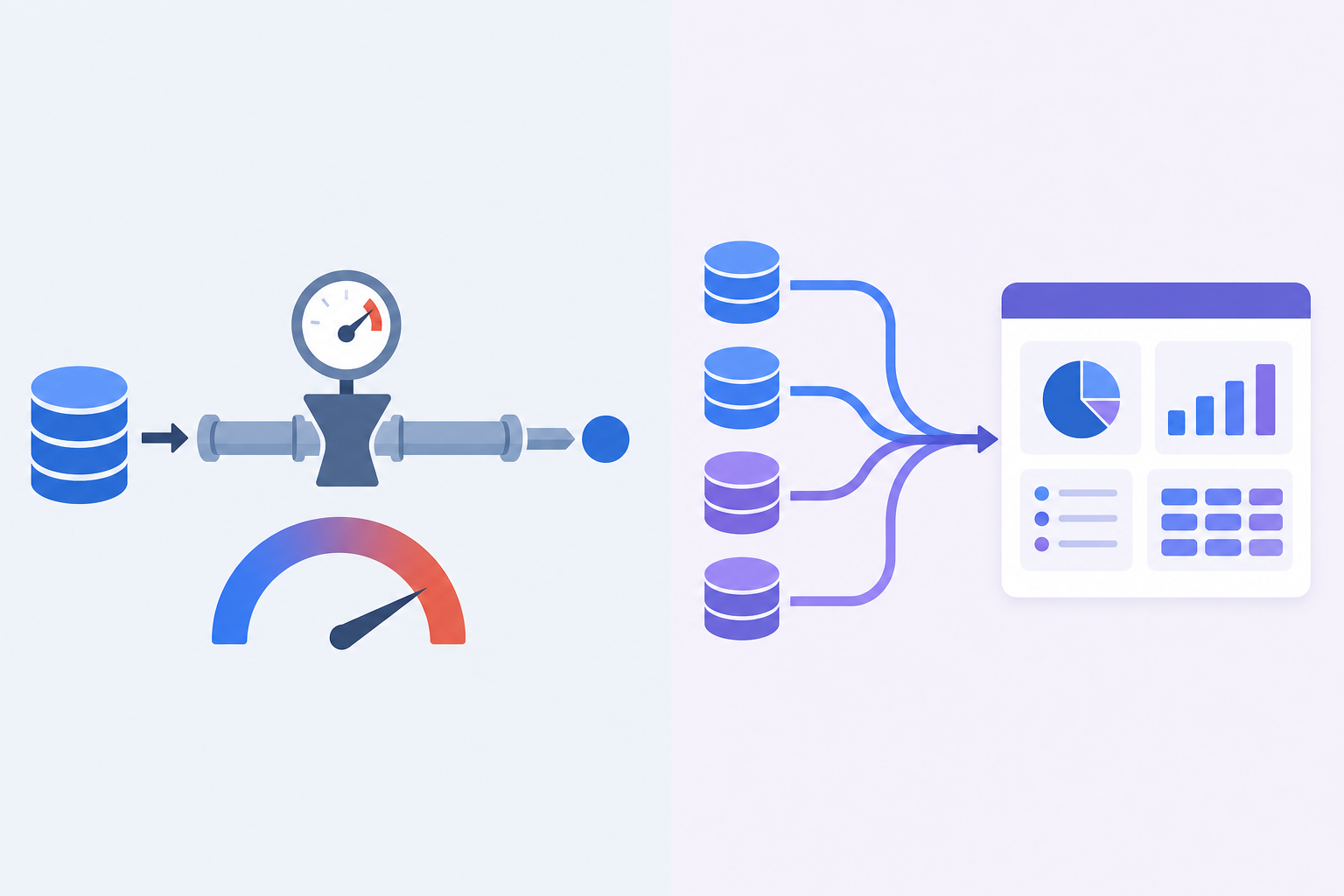
- Zapier's trigger-action model processes one record at a time. That works for notifications but falls apart when you need to sync hundreds of invoices or bulk-import historical CRM records across top integrations. There's no native batch or bulk data processing.
- Task-based pricing scales poorly as your customer count grows. Each action consumes a task, and multi-step workflows multiply consumption fast. Once you're syncing data across dozens of customer accounts, costs compound in ways that are hard to predict and harder to defend.
- End users configure their own Zaps on Zapier.com. That means your customer leaves your product, builds something you can't see or control, and comes to your support team when it breaks. There's no escalation path and no visibility into what they built.
- There's no way to embed Zapier natively inside your product. Your customers experience it as a third-party tool, not as a feature of your app. For product teams that care about perceived product quality, that gap is tough to overlook.
If your use case is internal ops automation, Zapier is probably fine. If you're a SaaS company trying to offer native integrations and a Zapier app together as a product feature, the architecture mismatch eventually catches up with you.
Ownership of this problem typically falls on the CPO or Head of Partnerships — the person accountable for whether integrations ship, stay reliable, and feel like part of the product rather than a bolted-on afterthought. Engineering gets pulled in to maintain connectors, customer success inherits the support tickets, and product owns the roadmap debt. Everyone pays the cost; someone has to own the fix.
Best Zapier Alternatives in October 2026
1. hotglue
hotglue is an embedded iPaaS built for B2B SaaS teams that need to ship native, white-labeled integrations inside their own product. Connectors are open-source, transformations run in Python, and pricing is per active tenant (not per task), so costs stay predictable as your customer base grows. (No, your CFO won't ask you to explain a surprise task-overage bill at the next all-hands.)
- White-labeled widget embeds directly inside your product
- 650+ open-source connectors with a Python transformation layer
- SOC 2 Type II, GDPR compliant, never stores customer data
- Tenant-based pricing: no surprise spikes from workflow volume
Best for: B2B SaaS companies that want to accelerate their SaaS integration strategy and have integrations feel like a native product feature.
2. tray.ai
Tray Embedded lets SaaS companies ship integrations under their own brand with a low-code builder. It's capable but expensive for growing teams, and using a workflow builder means pricing tied to workflow run volume, not tenant count.
Best for: Mid-market SaaS teams with high workflow complexity. Key limitation: pricing scales with usage, not users.
3. Workato
Workato connects apps through a recipe-based builder and covers a wide automation scope. Mid-market buyers consistently flag it as enterprise-priced, and the embedded experience exposes a workflow-builder UI to end users instead of a native product interface.
Best for: Large enterprise IT teams. Key limitation: pricing is opaque and the embedded UX feels like a third-party tool.
4. Pipedream
Pipedream is a code-first, event-driven automation tool for developers building lightweight pipelines. No embeddable widget, no white-labeling, and end users interact with Pipedream's own interface.
Best for: Solo developers or small eng teams. Key limitation: credits-based pricing becomes unpredictable at scale.
5. MuleSoft Anypoint Platform
MuleSoft is Salesforce's enterprise API management suite, built for large internal IT teams managing complex integration infrastructure. Implementation typically requires professional services and specialized expertise.
Best for: Enterprise IT organizations. Key limitation: not designed for customer-facing embedded integrations.
6. Make (formerly Integromat)
Make offers a visual, no-code drag-and-drop builder for multi-step workflows. Like Zapier, it's designed for end-user self-configuration, not developer-controlled embedded integrations, and has no white-label widget.
Best for: Small teams doing internal automation. Key limitation: no embedded product experience for your customers.
7. n8n
n8n is an open-source automation tool with self-hosted or cloud options, giving engineering teams code-level flexibility. It's not architected as an embedded iPaaS, and doesn't offer managed connector maintenance or per-tenant architecture.
Best for: Developer teams wanting maximum control over self-hosted automation. Key limitation: you own the infrastructure and connector upkeep.
Feature Comparison: Zapier vs Top Alternatives
The table below maps the capabilities that matter most to B2B SaaS teams across all seven alternatives covered in this post.
| Feature | Zapier | hotglue | tray.ai | Workato | Pipedream | MuleSoft | Make | n8n |
|---|---|---|---|---|---|---|---|---|
| White-label embeddable UI | No | Yes | Yes (limited) | No | No | No | No | No |
| Per-tenant pricing model | No | Yes | No | No | No | No | No | No |
| Bulk and batch data sync | No | Yes | Partial | Partial | No | Yes | No | Yes |
| Open-source connectors | No | Yes | No | No | Partial | No | No | Yes |
| Python transformation layer | No | Yes | No | No | Yes | Yes | No | Partial |
| SOC 2 Type II compliant | Yes | Yes | Yes | Yes | Yes | Yes | Yes | Partial |
| On-premise connector support | No | Yes | No | No | No | Yes | No | No |
A few things stand out here. Zapier has almost no native support for the features that SaaS product teams actually need: no embeddable UI, no per-tenant pricing, no bulk sync, and no on-premise support. It works well for internal automations, but it was never designed to power customer-facing integrations at scale.
hotglue is the only tool in this list that checks all seven boxes, which reflects its scalable integration architecture focused on native, embedded integrations for SaaS products, not general-purpose workflow automation.
Why hotglue Is the Best Zapier Alternative
Zapier is genuinely good at what it was designed for: letting individuals connect apps without writing code. If someone on your marketing team needs Typeform submissions to flow into a spreadsheet, it gets the job done. But that architecture, where end users configure their own workflows on a third-party site, does not translate to a product experience you can own.

hotglue is built for the opposite scenario. The widget embeds directly inside your product under your brand, connectors are open-source with a Python transformation layer for full data control, built for developers, by developers, and pricing is per active tenant so your bill scales predictably alongside your customer base. When a third-party API changes, our app integration management team handles the migration, not yours. You get native integrations without the maintenance overhead that tends to quietly consume engineering cycles for months at a time.
"The counterintuitive thing engineers find is that hotglue gives them more control than building in-house, not less, because the connector infrastructure is open and the transformation layer runs Python they already know."
If you want to see how it works for your specific connector stack, book a demo with our team.
Final Thoughts on Picking the Right Zapier Alternative
Your automation needs and your customers' needs are often two very different things, and the tool you pick should reflect that. Most of the options here are great for internal workflows, but only a few are built with your end users in mind. If customer-facing integrations are on your roadmap, a quick demo is a good way to see what that actually looks like in practice.
FAQ
Why do B2B SaaS teams outgrow Zapier even when it works well for internal automation?
The bigger issue is the architecture: there's no way to embed Zapier inside your product, so your customers leave your app to configure Zaps on Zapier.com. You lose visibility, control, and the native product experience your buyers expect, and your support team inherits the fallout when something breaks.
When should you consider switching from Zapier to an embedded iPaaS like Hotglue?
If your team is fielding integration requests from customers, trying to offer integrations as a product feature, or watching task-based costs climb unpredictably as your customer base grows, that's the signal. Zapier works well for internal ops automation, but the architecture wasn't built for customer-facing, white-labeled integrations inside a SaaS product.
What should you look for in a Zapier alternative for B2B SaaS integration?
Look for a white-label embeddable UI, per-tenant pricing (not per-task or per-workflow-run), bulk and batch data sync, and open-source connectors you can inspect and extend. On-premise connector support matters too if your customers run legacy accounting systems like QuickBooks Desktop or Sage 300 CRE.
How does Hotglue's pricing model compare to Zapier and tray.ai for growing SaaS products?
Hotglue charges per active tenant on a 30-day rolling window, so your costs scale with your customer count, not workflow volume. Zapier charges per task and tray.ai ties costs to workflow run volume, both of which can spike unpredictably as integrations get more complex or customer usage grows.
Can Hotglue replace Zapier for teams that need connectors to accounting systems like QuickBooks or NetSuite?
Yes, Hotglue supports QuickBooks Online, QuickBooks Desktop, NetSuite, Sage 100, Sage 300 CRE, and more, including on-premise systems that most embedded iPaaS providers skip entirely. Zapier has no on-premise connector support and no bulk sync capability, making it a poor fit for accounting and ERP integrations where data volume and reliability matter.