Your payroll integration works great in demo. Then an enterprise customer connects, their custom pay codes don't come through, and you realize your unified API quietly dropped them. That's the kind of thing that doesn't show up in a feature comparison table. This post gets into the specifics of how Hotglue and Merge handle the parts that actually matter for payroll SaaS products.
TL;DR: If your payroll SaaS needs write-back, custom field handling, and pricing that doesn't punish you for growing, Hotglue is the more workable foundation. Merge's normalized read layer is a great start, right up until it isn't.
- Merge's per-linked-account pricing hits ~$156,000/year at 200 accounts, a cost structure that grows with every new customer you add.
- Merge's common data model drops custom Workday objects and non-standard ADP pay codes, which blocks enterprise deals that depend on them.
- Write-back to ADP, Gusto, Paylocity, and Workday is where unified API tools like Merge and Finch hit a hard wall for payroll SaaS products.
- Hotglue prices on active tenants, exposes raw provider data, supports write-back with per-provider field mapping, and uses open-source connectors your team can inspect and extend.
What Is Merge?
Merge is a unified API product that normalizes third-party APIs across HRIS, payroll, ATS, CRM, accounting, and ticketing categories into a single standardized schema. Instead of your engineering team writing separate integration code for Workday, ADP, Gusto, and BambooHR, you write once against Merge's common data model and get coverage across all of them.
For early-stage products where standard HRIS or payroll read access is sufficient, that abstraction genuinely speeds things up. As one detailed evaluation of Merge put it, Merge is "among the best options available" for teams that need commodity connectivity and want to go from zero to working integrations in days.
The tradeoffs surface as requirements grow. That same evaluation notes that at 200 linked accounts, you're looking at $156,000 annually, a third party caches copies of your customers' HR and payroll data, and custom Workday objects your enterprise customers rely on may not surface through the unified schema. For payroll-specific SaaS products where write-back, custom fields, and cost predictability are part of the core product promise, those gaps matter.
What Is Hotglue?
Hotglue is an embedded integration tool with a flexible API connector built for B2B SaaS product teams that need to ship customer-facing integrations without building and maintaining every pipeline themselves. Your end users connect their tools directly inside your product, and Hotglue handles the authentication, data movement, and ongoing connector maintenance behind the scenes.
The key distinction from a unified API: Hotglue exposes provider-specific data as-is, with an optional unified schema layer you can apply when it makes sense. You are never forced into a rigid common data model that silently drops custom fields. Connectors are open-source, so your engineers can inspect, fork, or extend any of them.
A few specifics worth knowing for payroll and HRIS use cases:
- Connectors for Paylocity, ADP, Gusto, and Workday are in the catalog, covering the providers your customers are most likely already running.
- Write-back is supported, so you can push data back to source systems and do more than read from them.
- Pricing is per active tenant, not per linked account or data volume, which keeps costs predictable as you scale.
- Hotglue is SOC 2 Type II certified and processes data without storing it.
Every customer gets a dedicated Slack channel with direct engineering support, and new connectors go from sandbox to live in one to two weeks, momentum backed by hotglue's $4M seed round.
Payroll and HRIS Connector Coverage
Merge covers 250+ HRIS and payroll providers through its common data model, including ADP, Gusto, Workday, and BambooHR. That normalized read layer gets you basic employee and pay data across all of them without writing separate integration code per provider, which is a real accelerant early on.
The ceiling is provider-specific depth. As Truto's breakdown of Merge's limitations notes, the rigid common data model drops custom fields and non-standard configurations. If your enterprise customer has custom Workday objects or payroll fields specific to their ADP configuration, those simply won't come through.
Hotglue's catalog of integrations covers Paylocity, ADP, Gusto, and Workday natively, and the data comes through in its raw, provider-specific form. You get what the source system actually returns, not a filtered subset shaped by a fixed abstraction.
| Coverage dimension | Merge | Hotglue |
|---|---|---|
| Provider breadth | Wide (ADP, Gusto, Workday, BambooHR, more) | Paylocity, ADP, Gusto, Workday + catalog |
| Custom fields | Dropped by common data model | Exposed per provider |
| Write-back | Limited | Supported |
| Schema flexibility | Fixed unified model | Raw + optional unified layer |
Bidirectional Sync and Write-Back Capabilities
Read vs. write is where the unified API model starts to show its limits — a discovery most CPOs and Heads of Partnerships make at the worst possible moment, usually during an enterprise demo with a prospect who definitely did not come cheap to acquire. (Great timing, universe.)
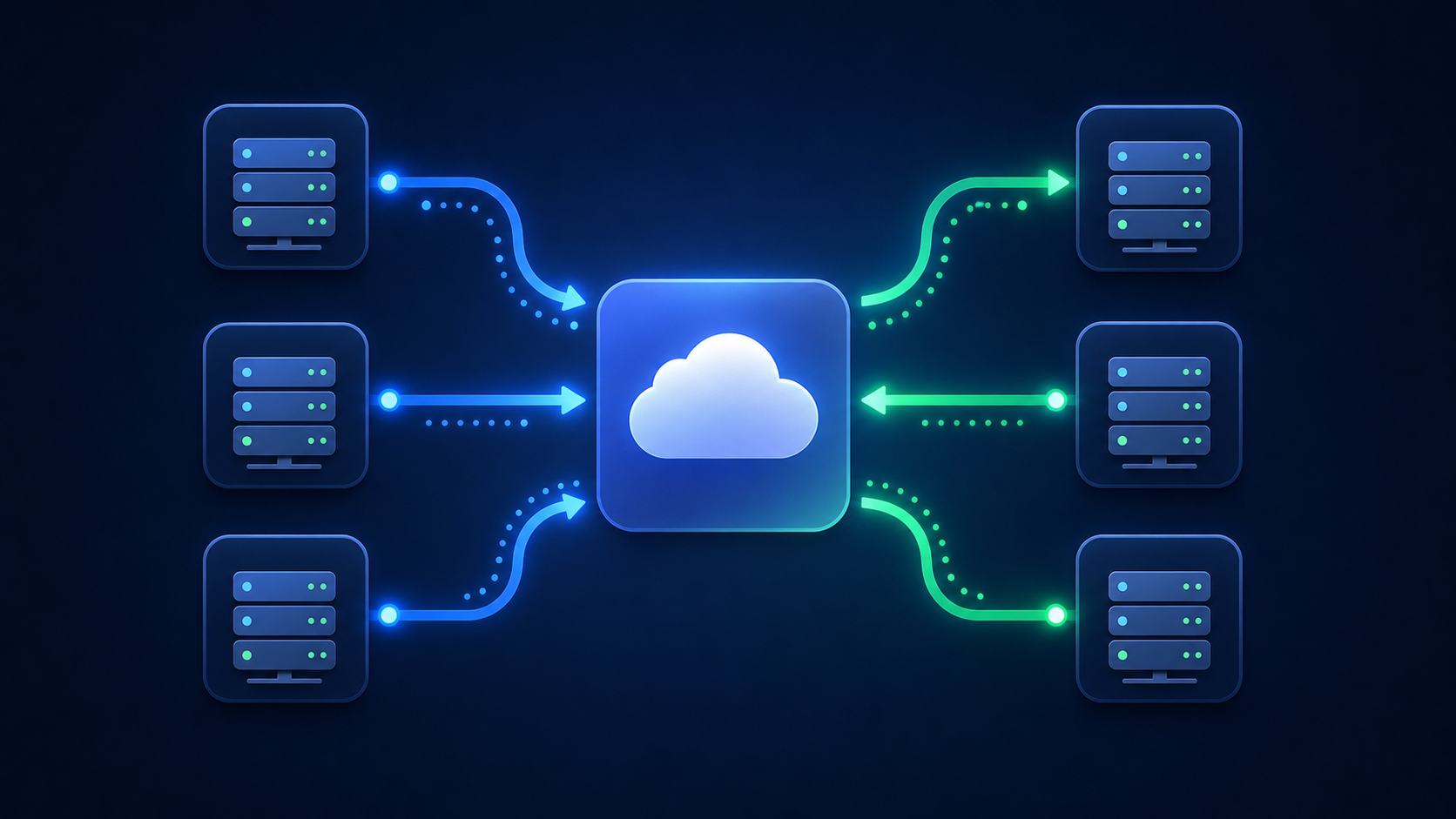
Merge's architecture is built around normalizing reads. Its common data model gives you a consistent shape for pulling employee records, pay periods, and org structures, but write-back support is limited by that same fixed schema. If the data you need to push back doesn't map cleanly to Merge's normalized fields, you're stuck. For products that need to close the loop, that becomes a hard blocker.
A concrete example: a restaurant-payroll bonus startup had already tried Finch, a unified API for HRIS and payroll, and hit exactly this wall. Their core need was to read POS sales and write bonus earnings back into payroll. Finch had no write-back. The read side worked; the write side didn't exist.
Hotglue supports full bidirectional sync, a capability you can test by signing up for Hotglue. That means reading from Paylocity, ADP, or Gusto and writing back to the same provider, with custom field mapping per payroll system. Response logging is included, so when a write call returns an error, your team sees exactly what the upstream API returned, not a generic translated message.
For payroll SaaS products, that write path often carries the entire value proposition. Pushing corrected pay rates, bonus amounts, or time-off accruals back into the source system is the job, and a tool without write-back support simply can't do it.
Custom Field Mapping and Per-Tenant Configuration
Merge's common data model is the product, which means anything outside it gets dropped. Custom Workday objects, non-standard ADP pay codes, unique department hierarchies your enterprise customer built over a decade of HR configuration: none of that surfaces through Merge's normalized fields. For early accounts with vanilla setups, this rarely comes up. For the enterprise deals that actually move ARR, it comes up constantly. This is typically the moment a CPO or Head of Partnerships realizes their integration strategy needs a rethink — and it usually lands on the CPO or Head of Partnerships to fix it, not the enterprise customer who surfaced the gap.
There's a secondary issue. Because Merge's pricing and architecture routes your customers' HR and payroll data through Merge's cache, enterprise compliance teams tend to flag it during security reviews. A third party holding copies of employee compensation and benefits data is a conversation you will have with procurement, legal, or both.
Hotglue approaches this differently. We offer a unified schema layer you can apply when standardization makes sense, but you're never forced into it. When a tenant has non-standard fields, you write a transformation script to handle them. GluestickAI, our LLM-based IDE, lets you describe the transformation logic in plain language and generates the Python code for it, so your team doesn't need to hand-code every edge case. Per-tenant configuration is the default model, not an exception path.
Hotglue's connectors are also open-source, so your engineers can read the actual code behind a Paylocity or Workday sync. Black-box connectors mean you're guessing when something unexpected happens. With open-source connectors, you're debugging.
Pricing Model and Cost at Scale
Merge's pricing is per linked account, meaning every customer who connects through your product adds directly to your bill. At 200 linked accounts, that reaches approximately $156,000 annually. Growth stops feeling like a win when each new customer materially increases your infrastructure cost in a way that doesn't compress with scale.

Hotglue's pricing is based on active tenants: a base platform license of $1,500 to $2,500 per month, plus a per-tenant fee that only counts customers who ran a sync in the last 30 days. A tenant connecting to Paylocity and ADP simultaneously still counts as one tenant. That structural difference compounds as your customer base grows from 50 to 500.
If your integration cost creeps past 10% of MRR, it starts affecting how you price your own product, which is why many teams start looking at Merge.dev alternatives for SaaS. That's a problem originating in your vendor's pricing model, not yours, as laid out in this Hotglue and Merge pricing comparison.
Support Model and Integration Ownership
Merge operates as a largely self-serve product. When something breaks, your engineering team opens a ticket. When an upstream payroll API changes its schema or deprecates an endpoint, you find out when syncs start failing. And when a Workday call returns a meaningful error code, what your logs show is a generic Merge error, stripped of the original upstream signal that would actually help you debug it.
For payroll integrations, that matters more than it does elsewhere. A failed HRIS sync is inconvenient. A failed payroll write before a pay run has direct consequences for real employees.
Hotglue's support model works differently. Every customer gets a dedicated Slack channel with direct access to the integrations engineering team, plus regular weekly or bi-weekly syncs to stay ahead of issues before they surface in production. The Hotglue team actively monitors third-party API changes and migrates connectors to new endpoints automatically, so your engineers are not the ones caught off guard by a deprecated endpoint at midnight, a pattern that also plays out in Hotglue vs Merge for ERP sync.
This support model is built for payroll use cases, where a failed sync before a pay run has real consequences and waiting on a ticket queue isn't an option.
That distinction is worth taking seriously at the product level. When you ship integrations to customers, you are implicitly promising they will keep working. The question is whether the maintenance burden of that promise sits with your team or someone else's.
Why Hotglue Is the Better Choice
For B2B SaaS teams building payroll products where write-back, custom field handling, and cost predictability are part of the core promise, Merge's architecture creates friction that compounds over time. Here is a side-by-side breakdown of where the two tools diverge on each of those dimensions:
- Write-back to ADP, Gusto, Paylocity, and Workday is supported in Hotglue with custom mapping per provider. Merge's write-back is locked to its fixed normalized schema and limited to fields that map to its fixed schema.
- Hotglue exposes raw, provider-specific data and handles per-tenant transformation logic, including custom Workday objects and non-standard pay codes. Merge's common data model silently drops anything outside its fixed fields.
- Hotglue connectors are open-source and easy to manage your app integrations with. Your engineers can read, fork, or extend them. Merge connectors are black-boxed, so debugging requires guessing at what the abstraction layer is doing.
- Hotglue prices on active tenants, with a single tenant connecting to multiple payroll systems counting as one. Merge's per-linked-account pricing at scale, a structure that penalizes growth directly.
- Every Hotglue customer gets a dedicated Slack channel, proactive connector migrations when upstream APIs change, and regular syncs with the integrations team. Merge is largely self-serve, with upstream payroll errors surfacing as generic Merge errors instead of the original signal you need to debug.
Merge works well when commodity read coverage is enough, though it helps to survey the full range of iPaaS integration platforms before committing to one. For payroll SaaS products where the product value lives in the write path, enterprise customers have non-standard configurations, and the cost structure needs to hold up past 100 tenants, Hotglue is the more workable foundation.
Final Thoughts on Merge vs Hotglue for HRIS and Payroll Integrations
Merge and Hotglue solve different problems, and the distinction matters more as your product matures. Read access to standard HR data is where Merge shines. Write-back, custom field handling, open-source connectors, and predictable pricing at scale are where Hotglue fills the gap — and fills it well. Hotglue was built specifically for the B2B SaaS teams who've already hit the ceiling on normalized read APIs and need a platform that grows with them: open-source connectors your engineers can actually debug, per-tenant pricing that doesn't turn customer growth into a budget conversation, and a dedicated support team that treats your payroll integrations like they matter (because they do — employees tend to notice when payday goes sideways). If you're weighing these options for a payroll product, a quick demo can show you how the write path and per-tenant config work in a real setup.
FAQ
Should my B2B SaaS team choose Hotglue or Merge for payroll integrations that require write-back?
If your product needs to push data back into Paylocity, ADP, Gusto, or Workday (corrected pay rates, bonus amounts, time-off accruals) Hotglue is the right fit, since write-back with custom field mapping per provider is fully supported. Merge's architecture is built around normalizing reads, and its write-back is limited by a fixed schema that blocks anything outside its standard fields.
Who is Merge best suited for, and when does Hotglue become the stronger choice?
Merge works well for early-stage products that need commodity read access across HRIS and payroll providers fast, with minimal engineering setup. Once you have enterprise customers with custom Workday objects, non-standard ADP pay codes, or compliance teams asking why a third party caches their employees' compensation data, Hotglue's raw-data-first model and no-data-storage architecture become a better foundation.
How does Hotglue's pricing hold up compared to Merge's as my customer base grows past 100 tenants?
Merge prices per linked account, so the cost scales directly with every new customer you add (see the Pricing Model section above for the full breakdown). Hotglue charges per active tenant on a 30-day rolling window, and a single tenant connecting to both Paylocity and ADP counts as one tenant, so the cost curve stays predictable as you scale.
What happens when an upstream payroll API changes and breaks a sync? How do Hotglue and Merge handle it differently?
With Merge, your engineering team typically finds out about a deprecated endpoint when syncs start failing, and error logs return generic Merge-layer messages stripped of the original upstream signal you need to debug. Hotglue's integrations team actively monitors third-party API changes and migrates connectors to new endpoints before failures hit production, and every customer gets a dedicated Slack channel with direct access to the integrations engineering team.
Can my engineers inspect or modify Hotglue's Paylocity or Workday connectors if something unexpected comes back from the API?
Yes. Hotglue's connectors are open-source, so your engineers can read the actual code behind any sync, fork it, or extend it for edge cases. Merge connectors are black-boxed, which means when something unexpected happens at the provider level, debugging requires guessing at what the abstraction layer is doing instead of reading the source directly.