If your roadmap keeps getting eaten by integration work, you're not alone. Most CPOs don't realize how much of their engineering capacity is quietly going toward keeping connectors alive instead of building the product that actually wins deals. There's a real number behind that tradeoff, and it's worth looking at before you scope the next one.
TL;DR: Building integrations in-house costs roughly $20K to $40K per connector plus ongoing maintenance, quietly drains your engineering roadmap, and rarely shows up in the original estimate, so here's how to decide when to build and when to buy.
- A single in-house integration costs $20K-$40K to build, plus 15-25% of that annually just to maintain
- Hidden costs like API breaking changes, customer edge cases, and engineer turnover compound fast across a catalog
- Build in-house only if the integration is a genuine differentiator, you have dedicated ownership, and a shallow backlog
- Deeply integrated customers create switching costs that work in your favor, making connector depth a retention lever
- Hotglue handles the long tail of integrations across 70+ B2B SaaS companies on a tenant-based pricing model
Why Integrations Are No Longer Optional for B2B SaaS
A few years ago, integrations were a feature. Today, they're closer to table stakes. Enterprise buyers won't sign without them. Mid-market customers churn when they can't connect their existing tools. And your sales team has probably started losing deals to competitors who offer a longer connector list, not a better core product.
Deeply integrated customers have more reasons to stay. Integrations create switching costs, support expansion revenue, and speed up onboarding. Any SaaS company serious about net revenue retention has to take its integration catalog seriously, which means eventually confronting the question of who builds it and how.
The True Cost of Building Integrations In-House
Building integrations in-house feels financially sound until you price it out. A single integration typically runs 3 to 6 weeks of engineering time, putting initial build costs between $20,000 and $40,000 before a single user has connected anything, according to one vendor's estimate, though figures in this range are widely cited across the industry.
Then the meter keeps running. A common industry rule of thumb puts annual maintenance at 15 to 25% of original build cost. Applying that rule to a $30,000 integration works out to roughly $4,500 to $7,500 per year just to keep the lights on, not counting API-breaking changes, schema drift, or customer-specific variations. Multiply that across a catalog of ten integrations and you have a sizable engineering budget commitment that almost never shows up in the original estimate.
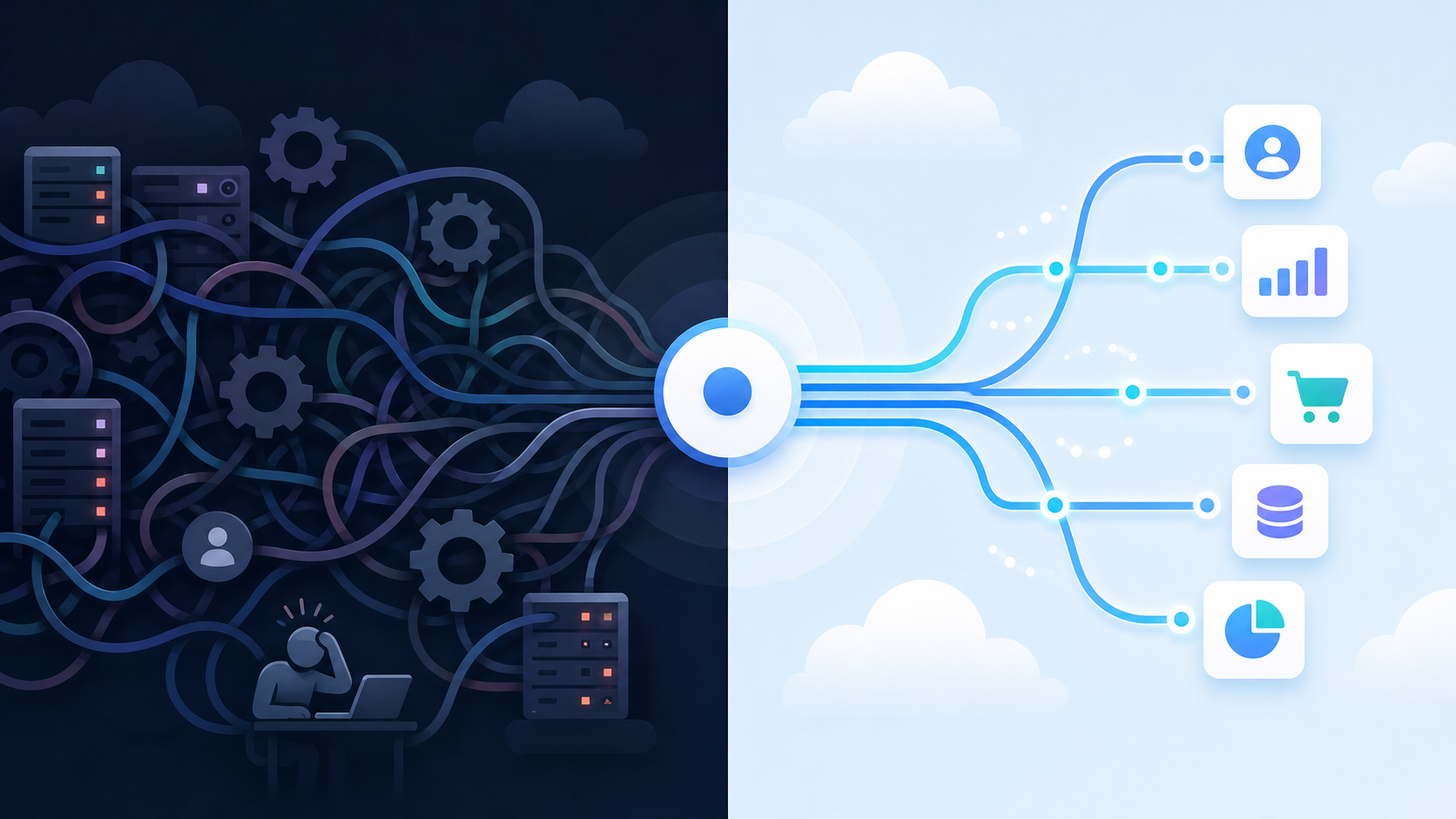
The Hidden Costs That Never Show Up in Your Estimate
The initial build estimate captures developer hours. It rarely captures what comes after.
Third-party APIs ship breaking changes on their own schedule, and deprecation notice is not always generous. Each change requires someone on your team to catch it, triage it, and fix it before customers notice their sync is silently failing, a discipline covered in more depth in this connector maintenance guide.
Customer-specific variations compound this. One customer runs QuickBooks with a custom chart of accounts. Another uses a non-standard OAuth flow that requires PKCE. Each edge case that looks like a one-hour fix can quietly consume a full sprint.
Then someone leaves. The engineer who built the connector understood every undocumented quirk. That knowledge rarely survives offboarding intact, and the next person inherits a system they didn't design, with no test coverage and a support ticket already open.
The Opportunity Cost Equation
Every sprint your engineers spend on integration maintenance is a sprint not spent on the features that actually set your product apart. That math gets painful when you tally it across a quarter, and somehow even more painful when you have to explain it in a planning meeting.
Ownership of the integration roadmap typically falls on the CPO or Head of Partnerships, but the day-to-day maintenance load lands squarely on engineering. That disconnect between who promises integrations and who has to keep them alive is where most of the friction lives.
When integration requests pile up faster than the team can handle them, a meaningful slice of your roadmap disappears into connector work, API debugging, and edge case handling that customers never see and competitors never have to match. As a rule of thumb, five or more requests sitting open in the backlog at once is a sign the in-house approach is under strain.
The compounding effect is what CPOs feel most. Integrations don't get easier over time. The catalog grows, the maintenance surface expands, and the engineering team that once handled it comfortably starts triaging which connectors to let degrade quietly. That's when the opportunity cost stops being theoretical.
What Integrations Actually Do to Retention and Revenue
Deeply integrated customers are harder to churn. When your product is syncing data with a customer's QuickBooks, Salesforce, or Paylocity instance, switching vendors means migrating workflows, re-mapping fields, and retraining teams. That friction works in your favor.
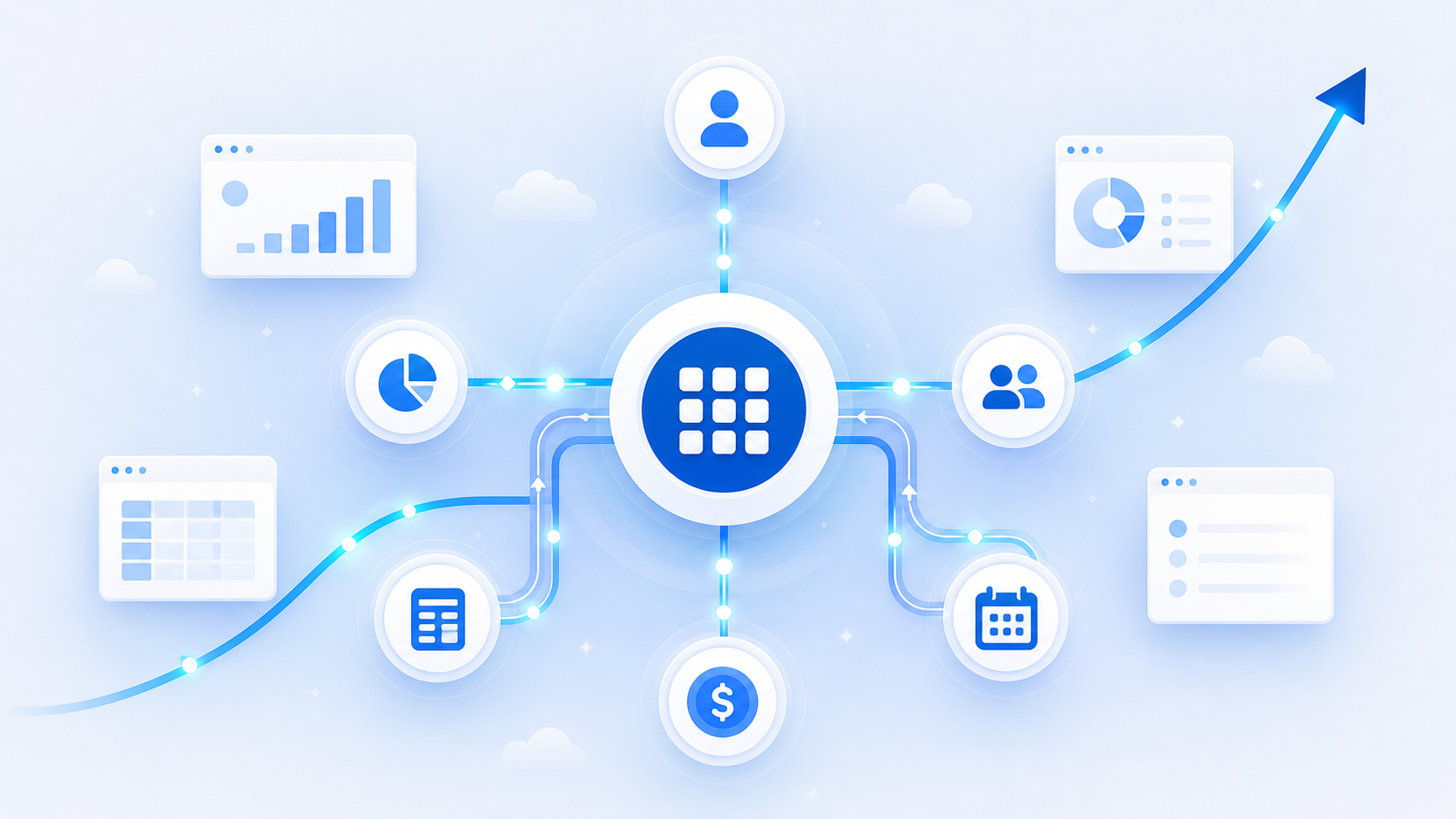
Customers who connect integrations also tend to expand usage over time. They've committed to your product as infrastructure, not software, and that commitment compounds, which is exactly why integration backlogs threaten renewals when left unaddressed.
For a CPO, this reframes the integration roadmap entirely. Connector depth stops being a feature request and starts being a retention lever.
When Building In-House Still Makes Sense
Building in-house is the right call in a few specific situations, but those situations are narrower than most teams assume when they first start scoping the work.
- The integration connects to a proprietary internal system with no public API documentation and no third-party tooling that could reasonably abstract it.
- The integration logic is so tightly coupled to your core product that it constitutes a genuine competitive differentiator, meaning how data moves is part of what you sell.
- Your team has the bandwidth to own connector maintenance long-term, including API version upgrades, schema changes, and customer-specific edge cases, without pulling engineers off roadmap work.
If all three of those are true, build it. The calculus changes when any one of them isn't.
The Phases of Integration Work Most Teams Underestimate
Most engineers scope the build phase and call it done. The full lifecycle looks quite different.
- Requirements gathering and API research across every target system
- Schema design and field mapping for each customer's data shape
- Implementation and auth flow for each connector
- Validation against real customer data, which almost always surfaces surprises
- Production release and monitoring setup
- Ongoing maintenance as third-party APIs deprecate endpoints and shift behavior
The first three phases get estimated. The last three get inherited. Validation alone routinely surfaces edge cases that add weeks to a timeline nobody budgeted for, and production monitoring is often skipped entirely until something breaks quietly in the background, which is one reason engineers dread in-house integrations. That silent failure is where customer trust erodes fastest.
A Decision Framework: Build vs. Buy for SaaS Integrations
Five questions cut through most of the noise:
- Is this integration core to your product's differentiation, or is it table stakes your customers expect?
- Do you have a dedicated integrations engineer, or are you borrowing from the product team?
- How many integration requests are currently in your backlog?
- Can your team absorb ongoing maintenance without pulling engineers off roadmap work?
- How much does a delayed integration actually cost in lost or churned revenue?
If the integration gives your product a genuine edge, you have dedicated ownership, and your backlog is shallow, build it. This in-house vs. embedded iPaaS framework can help you make that call with more confidence. If you're borrowing engineers, sitting on five or more open requests, and feeling the maintenance weight of connectors you already shipped, the math points the other way.
| Factor | Build In-House | Buy (Embedded iPaaS) |
|---|---|---|
| Initial build cost (per integration) | $20,000 to $40,000 | Included for library connectors; custom connectors carry a one-time build fee |
| Annual maintenance cost | 15 to 25% of build cost (~$4,500 to $7,500/integration) | Handled by the vendor (custom connectors carry a monthly maintenance fee) |
| Time to first connector | 3 to 6 weeks of engineering time | 1 to 2 weeks (new connector on request) |
| API breaking changes | Your team triages and fixes | Vendor manages updates |
| Engineer ownership risk | High: knowledge lost on turnover | Low: connector logic lives outside your codebase |
| Connector transparency | Full visibility (you wrote it) | Varies; hotglue offers 650+ open-source connectors |
| Best when… | Integration is a core differentiator; dedicated owner; shallow backlog | Borrowing engineers; 5+ open requests; growing catalog |
The Embedded iPaaS Option: What "Buying" Actually Means
Buying an integration solution doesn't mean buying Zapier for your customers. The category splits cleanly: internal automation tools like Workato handle IT workflows your team operates. Embedded iPaaS solutions live inside your product as a native experience your customers use directly, usually without knowing a third party powers it.
That distinction matters. An embedded iPaaS disappears behind your brand, handles auth, manages syncs, and delivers data to your backend. Your customers connect their QuickBooks or Salesforce accounts inside your product, not inside someone else's dashboard.
For B2B SaaS teams, this is the relevant category: infrastructure that ships as part of your product, not a tool your operations team configures separately.
How hotglue Approaches the Build vs. Buy Decision
Hotglue works with 70+ B2B SaaS companies, and the clearest pattern we see is this: teams that build everything in-house often hit a wall. The maintenance burden compounds, the backlog grows, and integrations that should take weeks take quarters.
Inventoro shipped 40+ integrations in their first three months with hotglue. Their prior pace was approximately six months per integration built in-house.
A few things make that possible:
- Over 650 open-source connectors mean your engineers can inspect and fork any connector instead of trusting a black box.
- Pricing is tenant-based, not volume-based, so costs stay predictable as your customer base scales.
- When a customer requests a connector you don't have, we can stand it up in one to two weeks from API access.
For teams weighing their options, our guide on choosing an embedded iPaaS solution walks through the tradeoffs, but for teams that have already built integrations in-house, hotglue handles the long tail without displacing what you've already shipped. The first few connectors often make sense to own. The next twenty rarely do.
Final Thoughts on Choosing the Right Integration Approach
The build vs. buy question gets clearer once you tally what in-house integration work actually costs across a full year. For many B2B SaaS teams, the math starts to tip once the backlog outgrows the team. Keeping your engineers focused on what your product does best is worth taking seriously, and hotglue is built to help with exactly that. With 650+ open-source connectors, tenant-based pricing, and a team that can stand up a new connector in one to two weeks from API access, it's the integration infrastructure that scales with you instead of against you. Book a demo for a concrete look at what that looks like in practice.
FAQ
How do I add QuickBooks Desktop or Salesforce integrations to my SaaS product without a dedicated integration engineer?
Use an embedded iPaaS: it's faster and avoids the maintenance burden that in-house builds carry long-term.
You have two real options: build the auth flows, sync logic, and maintenance yourself, or use an embedded iPaaS that handles all of that inside your product. For systems like QuickBooks Desktop, which requires a Windows agent and the QuickBooks Web Connector, building in-house is especially expensive because cloud-only approaches simply don't work.
Hotglue supports QuickBooks Desktop, Salesforce (including PKCE auth), and 650+ other connectors out of the box, so your team skips the build phase entirely and ships a native integration experience without writing connector code from scratch.
Should I build SaaS integrations in-house or buy an embedded iPaaS when I've already shipped a few connectors myself?
Build in-house when the integration is genuinely tied to your core product's value and you have a dedicated engineer who can own maintenance long-term. Buy when you're borrowing engineers from the product roadmap, sitting on five or more open integration requests, or already feeling the weight of API version changes and schema drift across connectors you've already shipped. The first few connectors often make sense to own, but the next twenty rarely do, and the maintenance surface only grows from there.
How do SaaS integrations reduce churn and increase expansion revenue?
Customers who connect your product to their existing tools (QuickBooks, Salesforce, Paylocity) embed your product into their workflows and face real switching costs if they leave. That friction compounds over time: deeply integrated customers are more likely to expand usage and treat your product as infrastructure. For a CPO, that reframes integration depth from a feature request into a retention lever worth putting on the roadmap.
Which embedded integration tools have open-source connectors I can inspect and customize?
Most embedded iPaaS providers ship connectors as black boxes: you get the behavior but no visibility into the underlying code. Hotglue's 650+ connectors are fully open-source, meaning your engineers can inspect, fork, or extend any connector without filing a support ticket and waiting. That matters most when a customer has a non-standard setup, like a custom QuickBooks chart of accounts or a Salesforce instance using a non-default OAuth flow, where the ability to read and modify connector logic is the difference between a one-day fix and a two-week back-and-forth.
What does SaaS integration software cost compared to building in-house over three years?
A single in-house integration typically costs $20,000 to $40,000 to build, plus 15 to 25% of that annually in maintenance, and that's before accounting for API-breaking changes, engineer turnover, or customer-specific edge cases. Across ten integrations, that's a quiet six-figure engineering commitment that almost never appears in the original estimate. An embedded iPaaS like Hotglue runs on a base license plus per-active-tenant pricing, designed to stay under 10% of your MRR. Hotglue's team handles API maintenance and connector updates, and builds new connectors in one to two weeks from API access, so your engineers stay on roadmap work.