Posting a journal entry to a multi-subsidiary NetSuite instance is nothing like posting to a single-entity one. The subsidiary field alone controls which GL accounts are valid, which currency applies, and which approval workflow fires. Get it wrong and you're either looking at a rejection or a misfiled entry that finance catches weeks later, right around the time everyone is trying to leave for the weekend. There's a better way to think about the architecture before you get there.
TLDR:
- Every NetSuite journal entry requires a subsidiary field; missing it means rejected posts and month-end surprises
- Intercompany transactions need dual-leg posting; integrations that skip the offsetting entry create phantom balances
- A hybrid pipeline architecture scales best: shared transformation logic with per-subsidiary configuration overrides
- Embedded ETL handles subsidiary routing, GL validation, and currency conversion before any record reaches NetSuite
- hotglue's NetSuite connector exposes GL mapping and subsidiary assignment so finance teams can self-serve corrections
What Multi-Subsidiary NetSuite Means (and Why It Gets Complicated Fast)
NetSuite's subsidiary model lets companies run multiple legal entities under one account, each with its own chart of accounts, currency, tax rules, and reporting structure. That's genuinely useful for holding companies, international businesses, or any org that's grown through acquisition.
The problem surfaces the moment you try to integrate NetSuite with another system. A single-entity setup has one chart of accounts, one base currency, one set of GL codes. A multi-subsidiary setup might have a dozen, and they rarely align neatly. Records that belong to one subsidiary can't simply be posted to another. Transactions need subsidiary context baked in, or NetSuite rejects them outright.
That rejection is the model working as designed. But any integration that ignores subsidiary structure will fail in production, usually in ways that are annoying to debug — and somehow always at 4:55 PM on a Friday.
NetSuite OneWorld and the Multi-Subsidiary Data Model
NetSuite OneWorld is the product tier that makes multi-subsidiary management possible, and building a reliable NetSuite connector means accounting for it from day one. Without it, you're working with a single-entity instance. With it, you get a parent-child hierarchy where each subsidiary can have its own chart of accounts, base currency, tax nexus, and reporting calendar, all nested under one parent company. Oracle's NetSuite OneWorld docs cover the full architecture in detail.
At the API level, subsidiary context is a required field on journals, transactions, customers, and vendors. Every record is scoped to a specific subsidiary ID, and that ID controls which GL accounts are valid, which currency conversions apply, and whether intercompany relationships are permitted. Pull a vendor record without filtering by subsidiary and you may get results from three different legal entities in one response.
Parent subsidiaries can consolidate reporting across children, but the underlying records stay separated. That separation is by design, and your integration needs to respect it.
Common Integration Scenarios Across Multiple Subsidiaries
Multi-subsidiary NetSuite integrations tend to cluster around a handful of recurring patterns. Knowing which one you're dealing with shapes every downstream decision about mapping, routing, and transformation logic, and it's worth weighing in any ERP sync comparison before committing to a vendor.
Journal Entry Sync Across Entities
This is the most common scenario. A payroll system, expense tool, or revenue recognition layer needs to push journal entries into NetSuite, but the source system has no concept of subsidiaries. You have to map each transaction to the correct entity before posting, validate the GL accounts against that subsidiary's chart of accounts, and set the currency. Get any of that wrong and NetSuite rejects the entry.
Consolidated Reporting Feeds
Some teams pull data out of NetSuite across all subsidiaries to feed a data warehouse or BI tool. A single API query won't cleanly separate subsidiary data unless you filter explicitly. Without that, you end up with intermingled records that require downstream cleanup.
Customer and Vendor Sharing
NetSuite allows customers and vendors to be shared across subsidiaries, but records still carry subsidiary assignments. An integration creating customers from a CRM needs to know which subsidiaries to attach, or those customers won't appear where expected.
Payroll and Expense Routing
Tools like Paylocity or Gusto have no notion of your subsidiary hierarchy. Payroll entries need to be split and routed by employee location or cost center, then posted to the matching subsidiary. A single payroll run might fan out to four different entities with four different GL mappings.
Each scenario requires the integration layer to carry subsidiary context through the entire pipeline, not bolt it on at the end, a lesson covered in depth in our ERP integration guide for product teams. Ownership of that pipeline typically falls on the product or engineering team, often the CPO or Head of Partnerships driving the integration roadmap, with finance as the key stakeholder validating that entries land in the right entity.
The Journal Entry Sync Problem in Multi-Subsidiary NetSuite
Every journal entry line in NetSuite requires a subsidiary field. That field controls which GL accounts are valid, which base currency applies, and which approval workflow triggers. Miss the assignment and NetSuite rejects the post. Set the wrong one and the entry lands in the wrong legal entity's books, which finance teams catch at month-end close in the worst possible way.
Currency alignment is another common failure point. Each subsidiary has a base currency, and journal entry lines must match it or include an explicit exchange rate. A source system posting in USD to a EUR-denominated subsidiary needs conversion logic applied before the write, not after.
Parent rollup catches teams off guard too. NetSuite lets you post to the parent subsidiary, but that entry does not distribute down to child entities. It stays at the parent level, which looks fine in consolidated reports but breaks subsidiary-level P&L and tax filings.
Intercompany entries add one more layer. When a transaction spans two subsidiaries, NetSuite expects elimination entries on both sides. An integration that posts only one leg creates an imbalance that shows up in intercompany reconciliation reports and requires manual correction.
GL Account and Subsidiary Mapping Challenges
GL accounts in NetSuite are scoped per subsidiary. An account valid in your US entity may not exist, or may carry a different internal ID, in your UK or Canada subsidiary, one hidden cost alongside custom field remapping and duplicate vendor records that teams routinely underestimate. Charts of accounts can be partially shared, fully shared, or completely divergent depending on how the instance was configured, and that configuration often drifted over years before anyone thought to integrate it.
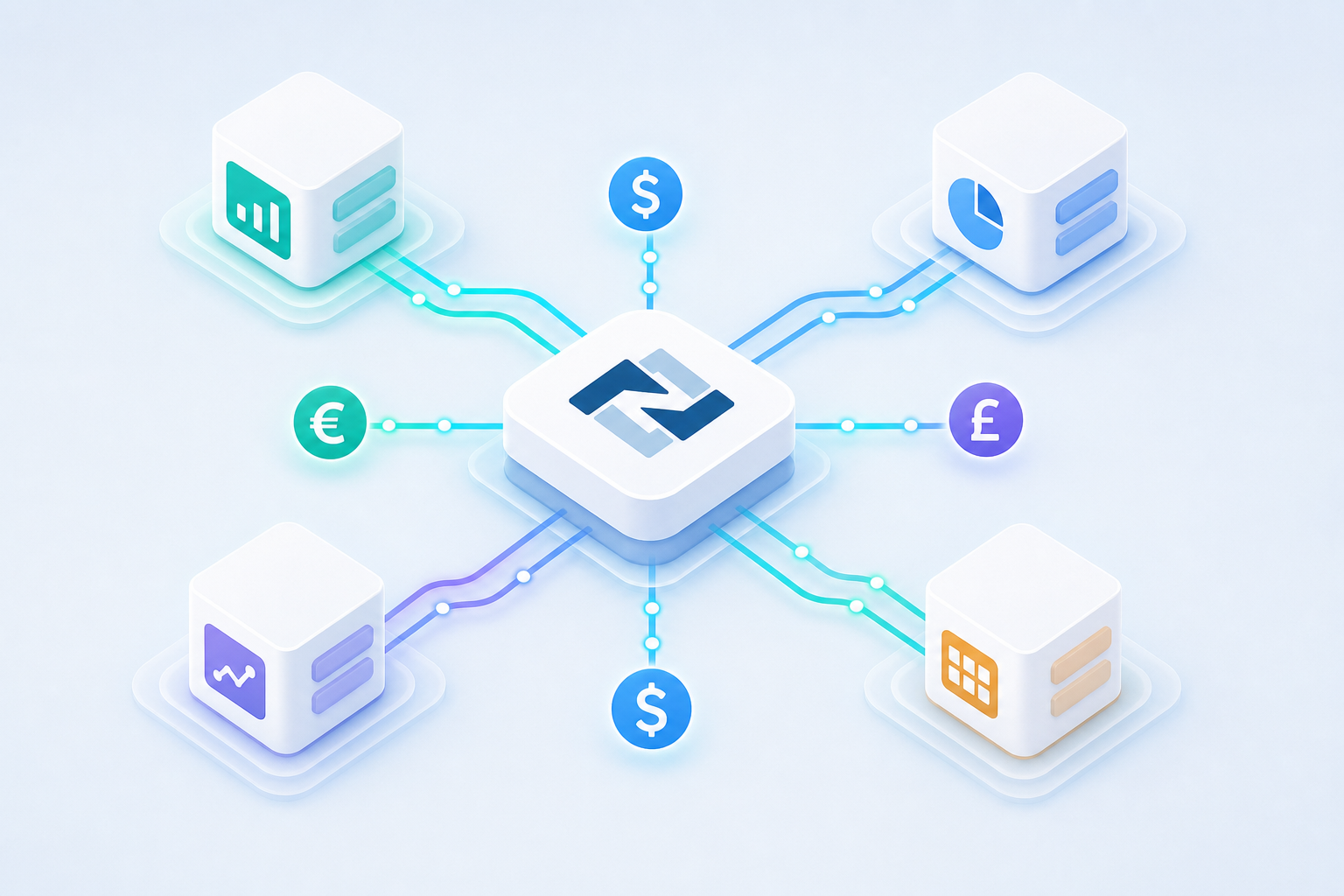
When a sync attempts to post to a GL account not assigned to the target subsidiary, NetSuite returns an error and the entry fails. Finance doesn't always see why, and ops teams spend time tracing it back to a mapping that looked correct but wasn't scoped right.
Currency constraints compound this. Some GL accounts in OneWorld are locked to a specific currency, and posting a line in a different denomination, even with an exchange rate attached, can trigger a rejection. The integration layer needs to validate account-currency combinations before writing, which means it needs to know more about the target subsidiary's configuration than most source systems bother to store.
For all these reasons, end users frequently need manual override access. A pre-built account mapping works until it doesn't, and finance teams need a way to correct mappings themselves without filing a support ticket or waiting for a developer. Any integration designed for multi-subsidiary NetSuite should expose field mapping controls that non-engineers can actually operate.
Handling Intercompany Transactions and Eliminations
Intercompany transactions are transfers, charges, or loans flowing between two subsidiaries under the same parent. One legal entity bills another for shared services, or a parent lends cash to a subsidiary. NetSuite records both sides: a receivable in one entity and a payable in the other.
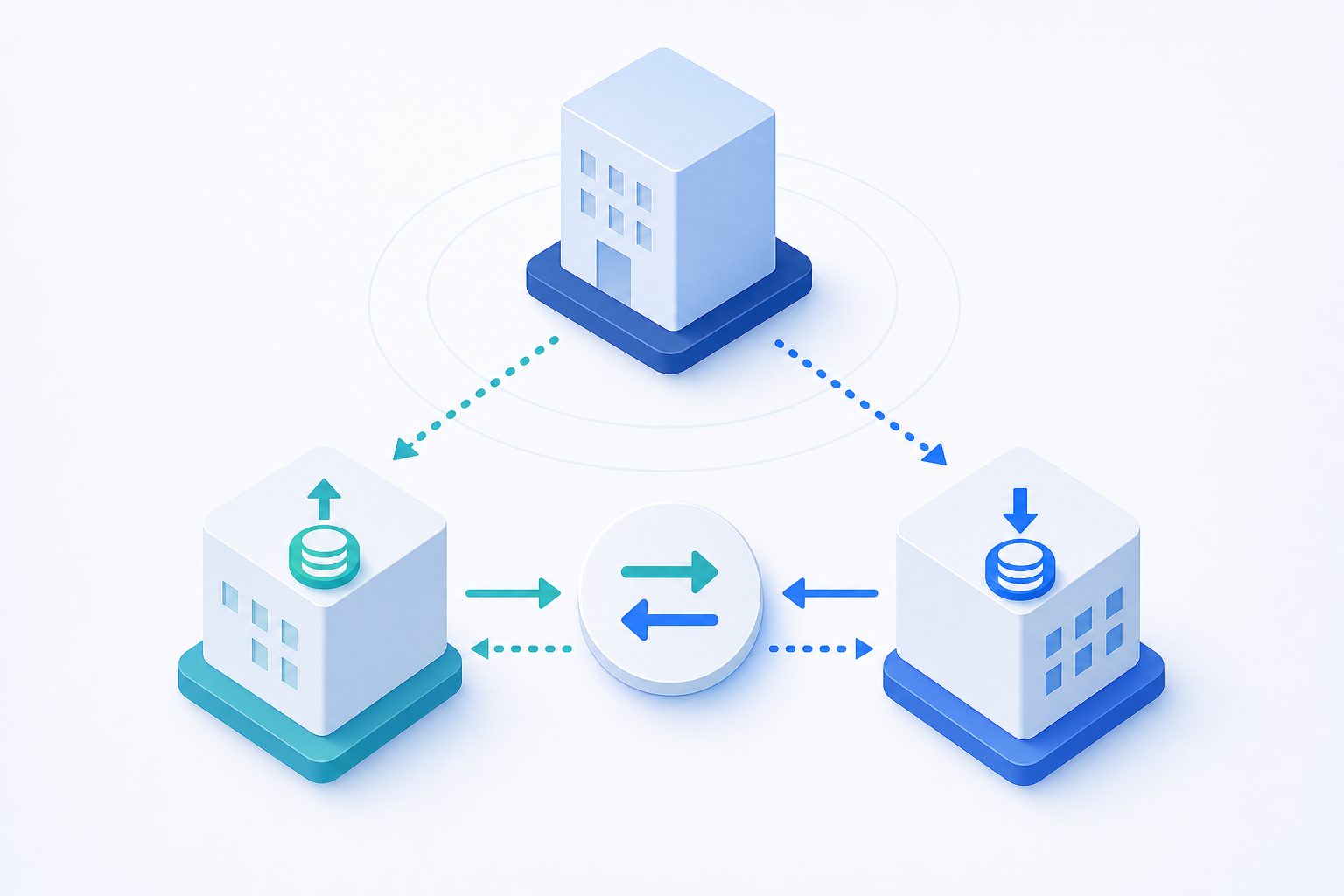
At consolidation, those two legs cancel each other out. The elimination entry removes the intercompany balance so the parent's consolidated financials don't double-count internal activity. NetSuite automates some of this through its intercompany elimination feature, but only when transactions are posted correctly with the right intercompany account designations.
Here is where integrations commonly break down. A third-party system pushing journal entries has no concept of intercompany relationships. It posts one leg of a transaction without creating the offsetting entry in the counterpart subsidiary. The books look balanced at the individual entity level, but the consolidated view carries phantom balances that elimination never removes. Finance finds this at period close, not in real time.
Fixing it requires the integration layer to identify which transactions are intercompany in nature, post the corresponding entry to the counterpart subsidiary, and flag both lines with the appropriate intercompany account codes NetSuite expects. That logic has to live somewhere in the pipeline, whether in a transformation script or explicit routing rules, before any write hits the NetSuite API.
Currency and Tax Considerations Across Subsidiaries
Each subsidiary in NetSuite has a functional currency that controls how transactions are recorded and reported. Post a line item in the wrong currency without an explicit exchange rate and NetSuite rejects it. Get the rounding wrong and you accumulate variances that haunt reconciliation at period close.
Exchange rate sourcing is its own problem. NetSuite stores daily rates, but an integration pushing historical data needs rates from the transaction date. Most source systems don't carry that context, which means your pipeline can produce entries that look technically valid but are financially wrong.
Tax handling compounds this further. VAT, GST, and sales tax treatment differ by subsidiary jurisdiction, and NetSuite's tax engine expects tax codes mapped to the correct nexus for each entity. That mapping has to be built into the integration layer explicitly, and updated whenever a subsidiary expands into a new tax jurisdiction.
Currency revaluation adds one more wrinkle. NetSuite periodically revalues open foreign-currency balances and posts adjustment entries automatically. An integration that re-posts transactions NetSuite has already adjusted can create duplicate or conflicting records. Scoping this behavior before go-live saves substantial cleanup time.
Approaches to Architecting a Multi-Subsidiary NetSuite Integration
Three patterns dominate when teams sit down to architect a multi-subsidiary NetSuite integration.
Single Pipeline with Subsidiary-Aware Routing
One pipeline ingests all source data and routes transactions to the correct subsidiary based on mapping logic baked into the transformation layer. A payroll run comes in, gets split by cost center or employee location, and each segment writes to its matched entity with the right GL accounts and currency.
The appeal is obvious: one codebase to maintain. The risk is that routing logic grows brittle as subsidiaries multiply. A misconfigured rule misdirects entries silently, and debugging requires tracing back through a pipeline that's doing a lot of work.
Separate Pipelines per Subsidiary
Each subsidiary gets its own isolated pipeline with its own configuration, GL mapping, and schedule. Fault isolation is clean: a failure in the UK entity doesn't touch the US entity. Audits are easier too, since each pipeline's logs map to one legal entity.
The tradeoff is maintenance overhead. At three subsidiaries this is manageable. At ten it becomes a real problem, the same scaling pain product teams hit when they outgrow a simple QuickBooks connector built for a single entity.
Hybrid Model
A shared transformation codebase handles common logic, but execution contexts are separated per entity. New subsidiaries inherit the shared logic and only require entity-specific configuration overrides. This is the most scalable approach, but it requires upfront design discipline.
| Approach | Maintainability | Fault Isolation | Scales to Many Subsidiaries |
|---|---|---|---|
| Single pipeline | High initially | Low | Poor |
| Separate pipelines | Low at scale | High | Moderate |
| Hybrid model | High with discipline | High | Strong |
For most growing multi-entity companies, the hybrid model is worth the upfront investment.
How Embedded ETL Fits Into a Multi-Subsidiary NetSuite Architecture
Point-to-point API integrations work fine for simple NetSuite setups, not unlike the early days of learning integrating QuickBooks with a SaaS platform. You call the API, post the record, move on. But multi-subsidiary configurations break that model quickly because the transformation logic required before any write happens is too complex to live in application code, the same kind of complexity that drives up QuickBooks API usage costs when left unmanaged.
Embedded ETL moves where that complexity lives. A dedicated transformation layer handles subsidiary routing, currency handling, and GL account validation before data touches NetSuite. The application sends the raw transaction; the ETL layer figures out which subsidiary it belongs to, validates the account against that entity's chart of accounts, applies the right exchange rate, and posts a clean, rejection-proof record.
Where stateless pipelines fall short
Stateful sync matters more in multi-subsidiary setups than in single-entity ones. The pipeline needs to track which records were posted to which entity, when, and whether any subsidiary-specific retry logic is pending. A traditional iPaaS workflow running stateless step-by-step logic can lose that context across runs, producing duplicate entries or missed transactions that are painful to sort out later.
Field mapping overrides are another area where embedded ETL earns its place. Finance teams across different subsidiaries often need different GL account defaults, different cost center assignments, or different intercompany codes. A transformation layer that exposes per-subsidiary mapping configuration without requiring a developer to redeploy for each change is the difference between a system finance can operate independently and one they depend on engineering to babysit.
How hotglue Handles Multi-Subsidiary NetSuite Integrations
hotglue's NetSuite connector treats subsidiary context as a first-class concern. GL account mapping and subsidiary assignment are exposed through the widget, so finance teams can configure and override mappings themselves without filing a ticket or waiting on engineering. That matters in multi-subsidiary setups where account codes differ by entity and need periodic correction.
The Python transformation layer is where subsidiary-aware routing logic lives. Before any record reaches NetSuite, a transformation script can validate GL accounts against the target subsidiary's chart of accounts, apply exchange rates from the transaction date, and flag intercompany entries for dual-leg posting. That logic is version-controlled, testable, and auditable, not buried in application code, which is the same principle behind our unified accounting API approach more broadly.
Rillet, an accounting automation company, uses hotglue to power bidirectional sync and journal entry automation across their integrations. That workflow, where entries need to flow both directions with correct state tracking, is exactly the pattern multi-subsidiary setups require.
On the reliability side, hotglue is SOC 2 Type II certified and never stores customer data: it processes and delivers. For finance data crossing multiple legal entities, that's a meaningful distinction.
The NetSuite connector is also open-source on GitHub, so your product team can read exactly how subsidiary filtering, GL validation, and journal entry writes are implemented, much like the approach outlined in our Sage 200 integration guide for other ERPs. No black box, no guessing what happens when NetSuite returns an error.
Final thoughts on Getting Multi-Subsidiary NetSuite Integrations Right
Subsidiary context has to travel through your entire pipeline, not get assigned at the last step. GL accounts, currencies, intercompany entries, and tax codes all depend on knowing which entity a transaction belongs to before any write happens. Get that right in your transformation layer and your finance team can close the books without chasing down misdirected entries. hotglue is the best embedded ETL solution for multi-subsidiary NetSuite integrations — purpose-built to handle subsidiary routing, GL validation, currency conversion, and intercompany dual-leg posting, all without burying the logic in your application code or requiring your engineering team to babysit it. If you want to see exactly how that transformation layer works in practice, talk to the hotglue team — we're happy to show you.
FAQ
What does embedded ETL mean, and how is it different from a traditional iPaaS for multi-subsidiary NetSuite integrations?
Embedded ETL puts the transformation logic (subsidiary routing, GL account validation, currency conversion) inside a dedicated layer that runs before any data reaches NetSuite, instead of scattering that logic across application code or relying on a generic workflow tool. A traditional iPaaS handles connectivity but typically runs stateless, step-by-step workflows that lose context across runs, which creates real problems in multi-subsidiary setups where you need to track which records posted to which entity and retry failed writes per subsidiary. For NetSuite, that dedicated transformation layer is what separates integrations that work in staging from ones that hold up at month-end close.
How does hotglue handle GL account subsidiary and currency mapping when end users need to override mappings without developer support?
GL account mapping and subsidiary assignment are exposed directly through the hotglue widget, so finance teams can correct mappings themselves without filing a ticket or waiting on engineering. The Python transformation layer validates GL accounts against the target subsidiary's chart of accounts and applies exchange rates from the transaction date before any write hits the NetSuite API. This matters because subsidiary-specific account codes drift over time, and a system that requires a developer to redeploy for each correction becomes a bottleneck at exactly the wrong moment.
Journal entry sync into NetSuite multi-subsidiary setup: what actually breaks and how do you fix it?
The three most common failure points are missing subsidiary context on the journal line, currency mismatches between the source system and the subsidiary's functional currency, and single-leg intercompany entries that create phantom balances at consolidation. All three require the integration layer to carry subsidiary context through the full pipeline (not bolted on at write time) and to identify intercompany transactions so the offsetting entry posts to the counterpart subsidiary with the correct intercompany account codes. Without that logic living explicitly in a transformation layer, finance teams find the problems at period close, not at sync time.
What is the hybrid pipeline model for NetSuite multi-subsidiary integrations, and when should you use it over separate pipelines per entity?
The hybrid model uses a shared transformation codebase for common logic (GL validation, currency handling, subsidiary routing) while keeping execution contexts separated per entity so a failure in one subsidiary doesn't affect others. Separate pipelines per subsidiary give you clean fault isolation but become a maintenance burden past three or four entities, while a single shared pipeline keeps the codebase lean but routes everything through one place where a misconfigured rule can misdirect entries silently. For any company with more than three subsidiaries or plans to grow through acquisition, the hybrid model is worth the upfront design work.
How do I sync payroll data from tools like Paylocity or Gusto into a multi-subsidiary NetSuite instance?
Payroll systems have no concept of your subsidiary hierarchy, so a single payroll run needs to be split by employee location or cost center and routed to each matching entity with the correct GL accounts and base currency for that subsidiary. Hotglue supports Paylocity and Gusto connectors alongside the NetSuite connector, and the Python transformation layer is where that fan-out routing logic lives: version-controlled and auditable, not embedded in your application.