Your embedded iPaaS AI agent setup might be running into a problem you didn't expect: the sync infrastructure works, but there's no way for an agent to call a tool right now, scoped to a specific tenant, without blowing up your auth flow. Plenty of vendors have started putting "MCP support" on their feature pages, but what that actually means in practice varies a lot. Let's break down what real support looks like and which platforms are worth your time.
TLDR:
- AI agents need live, per-tenant API access on demand, not scheduled batch syncs running on a clock
- Real MCP support means a dedicated endpoint scoped per tenant token with live tool discovery, not a blog post mention
- Verify any "agent-ready" claim by asking for the actual endpoint URL and how tenant tokens are issued
- Volume-based iPaaS pricing can spike fast once agents start generating API calls at agent speed
- Hotglue's Composite MCP gives each tenant a dedicated endpoint at
mcp.hotglue.com/mcpwith tools scoped to only their connected systems
What AI Agents Actually Need From an Integration Layer
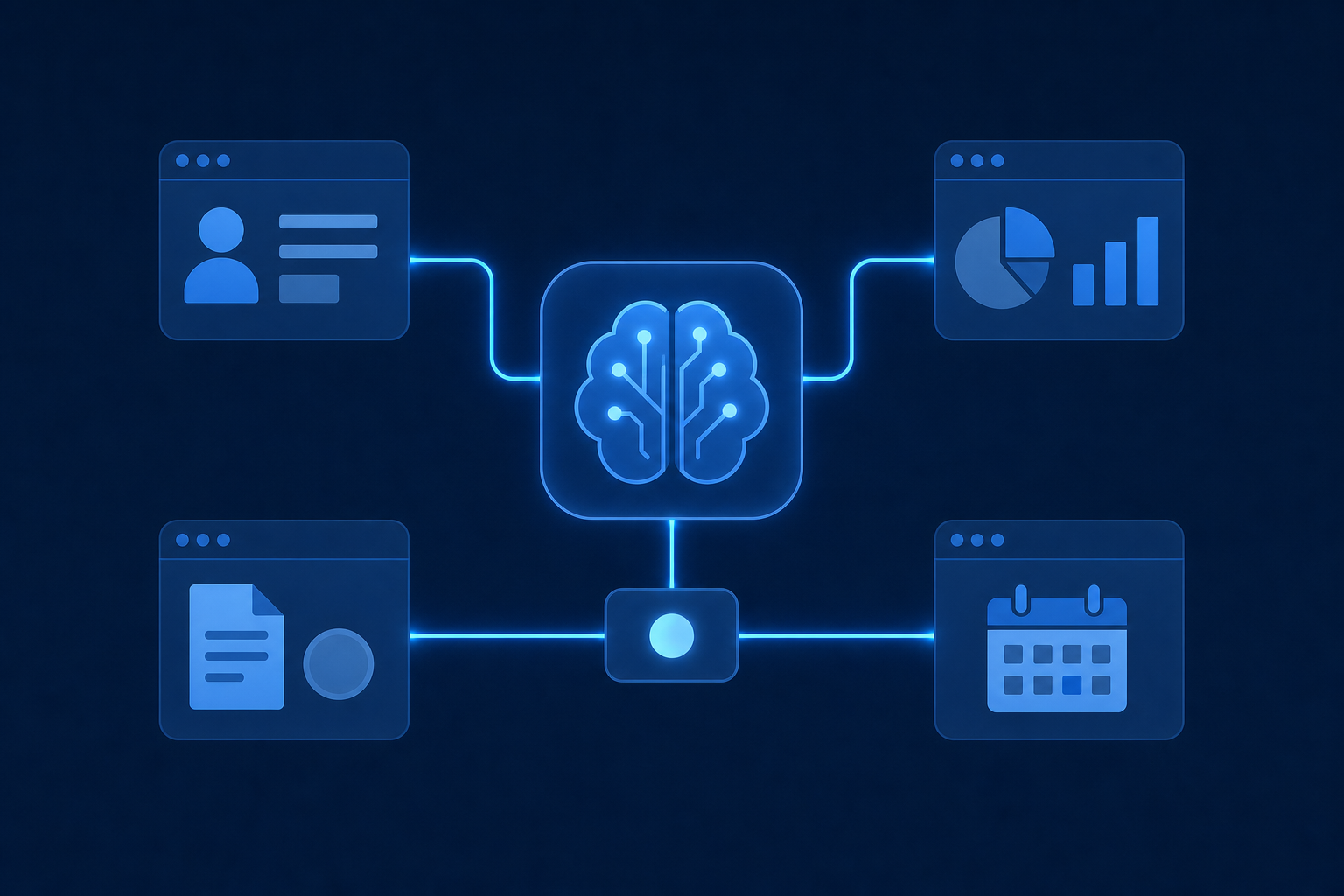
Scheduled batch syncs were built for a world where data moves on a clock. An agent doesn't work that way. It needs to read a customer's Salesforce pipeline, act on it, write a note back, and do all of that mid-conversation, on behalf of a specific user, with that user's credentials.
That's a fundamentally different pattern. The requirements stack up fast:
- Live API access, not cached snapshots, so the agent is working with real-time state instead of stale data from the last scheduled pull
- Per-tenant credential isolation so one customer's token never touches another's
- Scoped tool exposure based on what each tenant has actually connected
- Auth that survives across agent sessions without re-prompting the user
Most embedded iPaaS tools were designed to move data reliably from A to B on a schedule. Agents need something closer to a credentialed, interactive gateway, and those are different problems. Conflating them leads to real architectural gaps.
How MCP Works and Why It Matters for SaaS Products
Anthropic introduced MCP in late 2024 as an open standard for connecting AI applications to external systems, data sources, and tools through a unified client-server architecture. The spec's own analogy holds up well: MCP is to AI agents what USB-C is to devices. One standard connector, instead of custom wiring for every integration.
For B2B SaaS products, that matters because agents need to reach the same systems your users already have connected: CRM, accounting, billing, project management. Without a shared protocol, every agent-to-system connection becomes a bespoke engineering project.
On the auth side, MCP follows OAuth 2.1 for HTTP-based transports, so the authorization layer is standardized too. That's the part most teams underestimate until they're already deep in the implementation.
The Multi-Tenant Credential Problem Embedded Platforms Must Solve
In a multi-tenant SaaS product, every customer has their own OAuth tokens, their own scopes, and their own connected tools. As Truto's architecture guide puts it, a production multi-tenant MCP server must "securely broker AI agent access to thousands of customer accounts, each with their own OAuth tokens, scopes, and tool permissions, without ever leaking credentials between tenants or to the LLM itself." That gap between a local prototype and a production deployment is, in their words, brutal.
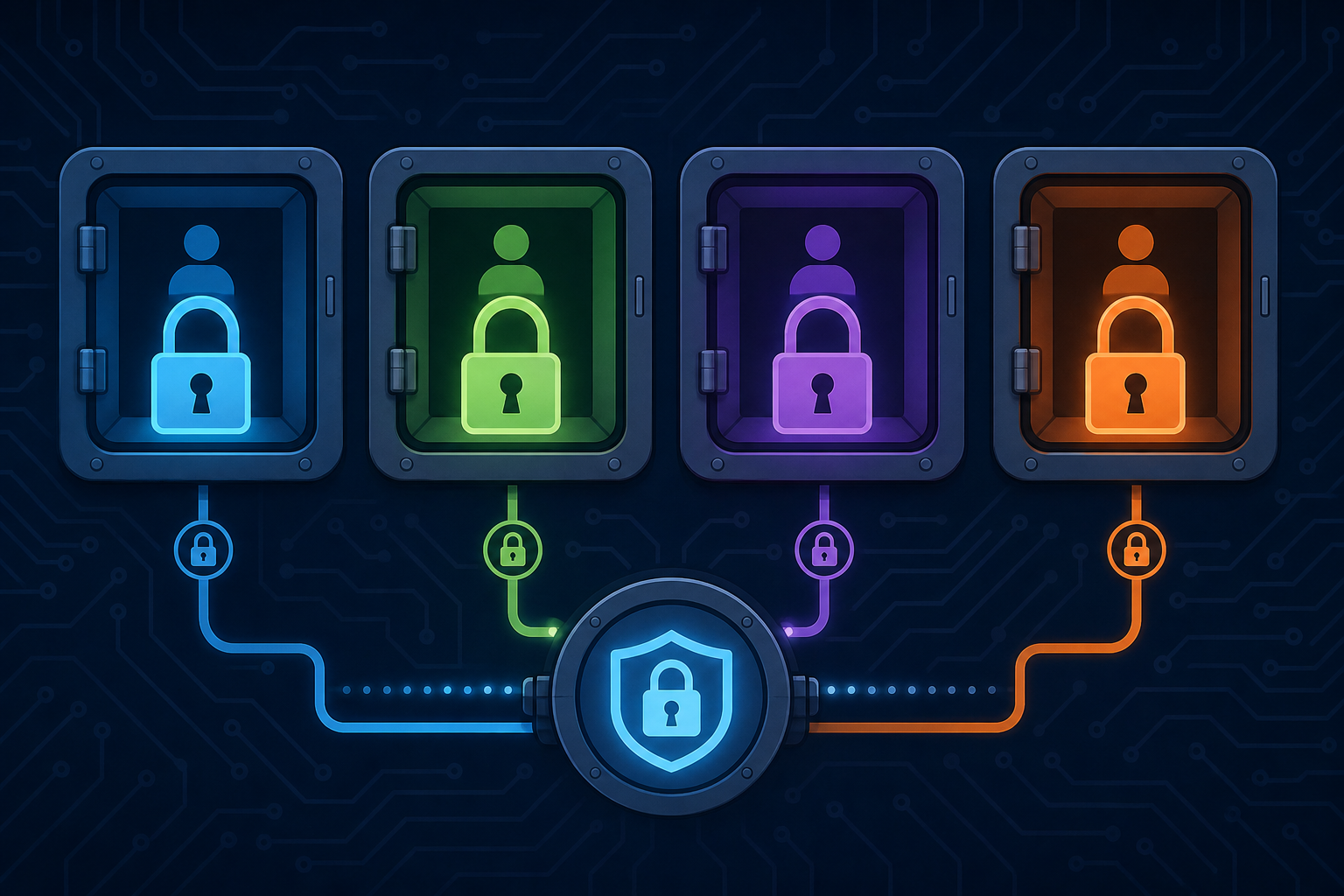
Any embedded iPaaS claiming AI agent support needs to answer a few concrete questions before that claim means anything:
- Are credentials stored and resolved per tenant, or shared at the environment level?
- Can the agent only access tools the specific tenant has connected?
- Does re-authentication require user intervention, or is token refresh handled automatically?
If those answers are vague, the "AI agent support" claim probably is too.
How Traditional Embedded iPaaS Platforms Handle Authentication Today
The standard embedded iPaaS auth flow is well-worn: a user opens a widget or Magic Link, completes OAuth with the third-party system, and the platform stores that token per tenant. From there, the integration runs on a schedule, polling or syncing data in batches until the next job fires.
That model works well for moving accounting records nightly or syncing CRM data hourly. Where it strains is when an agent needs to call a tool right now, mid-task, without waiting for the next scheduled window. Most platforms store tokens but expose no mechanism for an agent to invoke them directly. The sync infrastructure exists; the interactive, real-time access layer does not.
Be skeptical of vendors that describe their product as "agent-ready" without explaining how an agent actually calls a tool against a specific tenant's credentials on demand.
What "MCP Support" Actually Means in Practice
Vendors love to add "MCP support" to their feature lists. What that actually means varies wildly, much like what "unlimited PTO" means in a job posting — technically true, rarely used as advertised.
A genuine implementation looks like this:
- A dedicated, authenticated MCP endpoint scoped per tenant token, not a shared global endpoint that any agent could hit
- Tools resolved live from connectors that tenant has already linked, so an agent working with a Notion-connected tenant sees Notion tools and nothing else
- Namespaced tool identifiers (like
notion.search) to prevent collisions across connectors - Compatibility with existing OAuth flows, so the agent can act without forcing the user back through an auth screen
How to Tell Real Support from Marketing Copy
If a vendor's "MCP support" amounts to documentation that mentions the protocol with no token endpoint, no per-tenant scoping, and no tool discovery mechanism, that's positioning, not a working integration. Before assuming the capability is real, ask for the actual endpoint URL and how tenant tokens are issued.
Embedded iPaaS vs. the Agent Tools Layer: Choosing the Right Architecture
Standalone MCP servers and tool libraries are genuinely appealing early on. You define a few functions, wire up an API key, and an agent is calling tools within hours. The prototype works. The problem surfaces when you try to deploy that prototype to hundreds of customers.
Dedicated agent tooling layers hand multi-tenant credential management, token refresh, connector maintenance, and scoping logic back to your team. Every new connector your customers ask for becomes an internal engineering project. Every API deprecation becomes your problem to catch. For a direct comparison, see how embedded iPaaS vs. Zapier and Fivetran stacks up on connector ownership.
Embedded iPaaS changes that burden. The connector catalog, OAuth flows, tenant isolation, and sync reliability already exist. Adding MCP-based agent access on top of that foundation means the interactive layer and the batch layer share the same credential store and connector logic, eliminating the need to duplicate it across two separate systems.
The real architectural question is whether you want to own that infrastructure or build on top of one that already does.
Assessing Platform Depth: Questions to Ask Before You Commit
This decision typically lands on the CPO or Head of Partnerships, whoever owns the integration roadmap and is accountable when a customer's data sync breaks at 2am. Before signing anything, run through these questions with any vendor you're seriously considering when choosing an embedded iPaaS:
| Evaluation Question | Strong Answer | Warning Sign |
|---|---|---|
| MCP endpoint & per-tenant token issuance | Dedicated endpoint URL with token scoped per tenant, backed by documentation | "MCP support" exists only in a blog post with no working endpoint |
| Connector transparency | Open-source connectors your team can inspect, fork, and extend | Black-box connectors that tie you to the vendor's release timeline |
| Unified credential store | Same credential store powers both bulk syncs and real-time agent calls | Batch and agent layers are separate systems you must stitch together |
| Connector maintenance ownership | Vendor handles API deprecations and connector updates automatically | You open a support ticket and wait; the maintenance burden falls on your team |
| Tenant isolation enforcement | Isolation enforced at the credential level, beyond logical separation | Logical separation in a shared data model with no hard credential boundary |
| Pricing model predictability | Per-tenant pricing that stays flat as agent-generated API calls grow | Volume-based pricing that spikes once agents start calling APIs at agent speed |
A vendor that can answer all six clearly, with actual documentation to back each claim, is worth a deeper conversation. Vague answers on any of them usually signal the capability is not fully built yet.
How hotglue Approaches Embedded iPaaS for AI Agents
Hotglue built the Composite MCP feature to close the gap between scheduled ETL and live agent access. Every tenant that authenticates through hotglue gets a dedicated MCP endpoint at mcp.hotglue.com/mcp, and the tools available there are resolved live from the connectors that tenant has actually linked. A tenant with Notion connected sees notion.search. A tenant without it sees nothing. No shared global endpoint, no credential bleed.
Composite MCP plugs into the same widget and Magic Link auth flows already handling your scheduled syncs, so agents act on behalf of a customer's connected systems without triggering a separate re-authentication step. The credential store is shared, meaning the interactive agent layer and the batch sync layer run on the same infrastructure. That shared-store design cuts integration scope in half and removes an entire failure category from your stack.
The scale underneath that: 38,000+ active tenants, roughly 10 billion records processed weekly, and hundreds of open-source Singer and Airbyte-compatible connectors your team can inspect, fork, or extend. Pricing is per active tenant instead of data volume, so agent-generated API calls won't produce unexpected billing spikes as usage grows.
Final Thoughts on Building AI Agent Support Into Your Embedded Integration Layer
Most of the complexity in deploying AI agents across a multi-tenant product comes down to one thing: who owns the credential and auth layer. If your embedded iPaaS and your agent tooling are two separate systems, that answer gets messy fast. Getting clarity on that architecture early saves your team from a painful rebuild down the road. See how hotglue handles it if you want a concrete example.
FAQ
What embedded iPaaS platforms actually support MCP authentication for AI agents in 2026?
Most embedded iPaaS vendors list "MCP support" in their marketing without shipping a working implementation. A genuine implementation requires a dedicated, per-tenant MCP endpoint, live tool discovery scoped to what each tenant has connected, and OAuth token handling that works across agent sessions without re-prompting the user. See the hotglue section above for implementation specifics.
How do I use MCP to let AI agents authenticate with third-party business tools like Salesforce or Notion through my SaaS product?
MCP follows the OAuth 2.1 spec for HTTP-based transports, so agents authenticate through the same OAuth flows your users already complete when connecting a tool. The key requirement is that your integration layer resolves the right token per tenant at call time, so an agent acting on behalf of Customer A never touches Customer B's credentials. In Hotglue's implementation, this is handled through the same widget and Magic Link auth flows that already power scheduled syncs, meaning no separate re-authentication step is required when an agent needs to call a tool mid-task.
What is the difference between a unified API and an embedded iPaaS for SaaS integrations?
A unified API normalizes data from multiple sources into a single schema your product reads from, but your team still owns the authentication layer, connector maintenance, and tenant management. An embedded iPaaS sits inside your product and handles the full stack: OAuth flows, credential storage per tenant, scheduled syncs, and now, with MCP, live agent access. The practical difference is who absorbs the ongoing maintenance cost when a third-party API changes or a connector breaks.
How does an embedded iPaaS for AI agents handle the multi-tenant credential problem at scale?
Each tenant in a multi-tenant SaaS product has their own OAuth tokens, scopes, and connected tools, and a production deployment must enforce that isolation at the credential level, not merely through logical separation in a shared data model. The failure mode is an agent calling a tool with the wrong tenant's token, which is both a security issue and a data integrity issue. Hotglue enforces per-tenant isolation by scoping every MCP endpoint to a specific tenant's token, and the tool list returned to the agent reflects only what that tenant has actually connected.
Can my AI agent access Salesforce, QuickBooks, or Notion on behalf of a user without triggering a new OAuth login every session?
Yes, provided your integration layer handles token refresh automatically and persists credentials between agent sessions. In Hotglue's Composite MCP setup, the credential store is shared between the batch sync layer and the interactive agent layer, so a token authenticated once through the standard widget flow stays valid for both scheduled syncs and live agent calls without requiring the user to re-authenticate.